
Weekly Roundup
Mar 2 - 8, 2026
LEADING ARTICLE
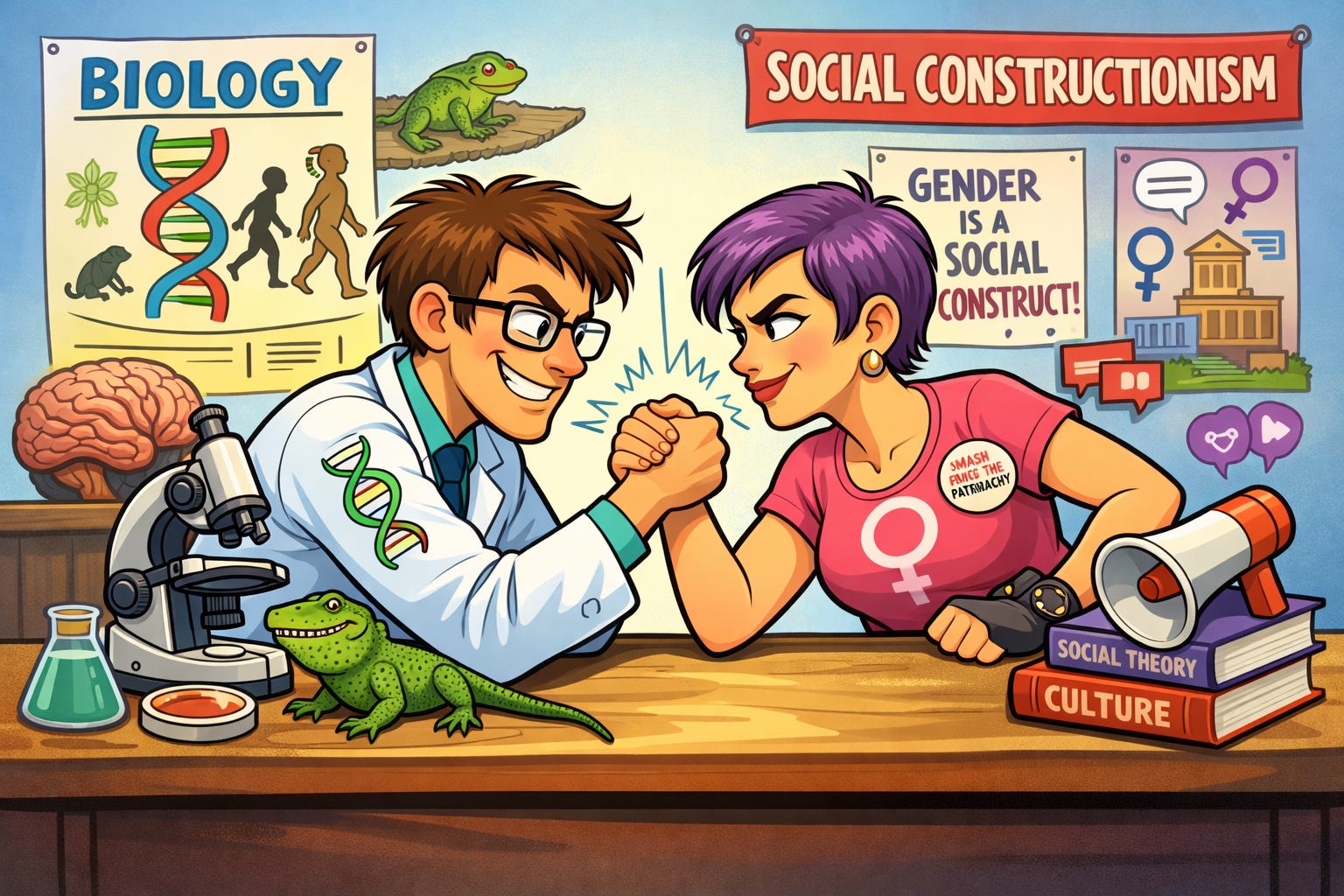
The Biological Reality of Sex and Gender: Challenging Social Constructionism
Human Nature
Abstract: This paper challenges the social constructionist perspective on sex and gender, which argues that gender is solely shaped by cultural norms and that biological sex exists on a spectrum. The research addresses whether biological evidence, including evolutionary psychology, neuroscience, and hormonal studies, contradicts the claims of social constructionism. Furthermore, the study critiques mainstream frameworks, such as the American Psychological Association’s guidelines, which emphasize the role of culture while disregarding biological underpinnings. The paper employs a multidisciplinary review of existing literature and research from evolutionary psychology, neuroscience, economics, and cross-cultural studies. Data from developmental biology, hormonal studies, and behavioral research are synthesized to evaluate biological differences between human males and human females. These findings are then compared with the claims of social constructionist theorists. Critical analyses of policies and guidelines, such as the APA’s position on masculinity, are included to illustrate the implications of social constructionist views in practice. The analysis demonstrates that biological factors such as hormones, brain structures, and evolutionary processes significantly influence sex and gender. Evidence from neuroscience reveals structural brain differences between human males and human females, while studies in developmental biology underscore the impact of prenatal hormone exposure on behavior. Cross-cultural research shows consistent gendered behaviors, challenging the assertion that gender is merely a social construct. Furthermore, the failure of conversion therapies supports the biological foundation of sexual orientation. The findings refute the core tenets of social constructionism, affirming the biological reality of sex and gender. While acknowledging the role of culture in shaping gender expressions, the study emphasizes the importance of respecting scientific evidence to inform policy and social discourse. A balanced approach that integrates biological and cultural perspectives is advocated, promoting inclusivity without undermining empirical reality.
THE NUZZO LETTER IN THE NEWS
On X this week, my posts on the women-only job advertisement at The University of Sydney (see Rubbish Bin) and my graph on sex differences in support for men in women’s sports made the “trending news.” The post on men in women’s sports was retweeted and commented by individuals like Colin Wright, Sharon Davis, Jennifer Sey, and Wesley Yang.

Should Nations Withhold Dues When UN Bureaucrats Engage in Overt Disinformation?
Domestic Abuse and Violence International Alliance (DAVIA)
ARTICLES AND ESSAYS
Sex/Gender
American Nurses Association Recognizes Men’s Health as a Nursing Specialty
Nursing World
UN Gender Education Initiatives Reveal Unacceptable Policy Gaps for Boys and Young Men
International Council for Boys and Men
Times of India
(*My brief comment on this story is available on X here.)
Biologist accuses Cornell of ‘egregious’ discrimination against white men in lawsuit
The College Fix
Avengers assemble! Meet our nation’s top ‘super zealot’
The Australian
(*My brief comment on this story is available on X here.)
Sky News Australia
A routine ABC News post about Australia’s gender pay gap quickly spiralled into a fiery online exchange, with the broadcaster jumping into the comments to seemingly defend its reporting.
Archives of Sexual Behavior
Abstract: Sexual satisfaction is a common goal within romantic relationships that contributes to individual and relational well-being. Yet, theoretical perspectives, and even popular assumptions, suggest that women may be less sexually satisfied than men. We tested this possibility among people in romantic relationships with two high-powered Integrative Data Analyses (one cross-sectional, n = 11,841, k = 28; one daily-experience, n = 1,827, k = 8, daily reports = 18,321). Contrary to theoretical and lay perspectives, partnered women reported slightly greater sexual satisfaction than did partnered men (r = .08). To further explore why partnered women reported greater sexual satisfaction than did partnered men, we conducted supplemental analyses that revealed that women’s greater sexual satisfaction was not a result of engaging in less frequent sexual behavior, their broader satisfaction with their relationship, or considering partners’ sexual enjoyment. In sum, although women may face obstacles that hinder their sexual experiences, these findings suggest that partnered women do not report being less satisfied and instead report being slightly more satisfied with their sex lives than do partnered men. Nevertheless, it is still unknown whether these slight differences in sexual satisfaction have practical implications for couples’ relationships or well-being.
Willingness to protect from violence, independent of strength, guides partner choice
Evolution and Human Behavior
Abstract: Ancestrally, physical violence from conspecifics was a recurrent adaptive problem. Did selection favor preferences for partners who are both strong (highly able) and willing to protect us from violence? Strength and willingness are interrelated, so dissociating their effects is necessary. Here we assessed both inferences and preferences. In 7 experiments (N = 4,508 U.S. adults recruited via MTurk), we systematically varied the willingness of a date or friend to physically protect you from an attack, compared to scenarios where you do not have this information. We also varied that person’s strength. Discovering that a person is willing to protect greatly increased their attractiveness as a romantic partner or friend, regardless of their strength. This held for both women and men raters, and when evaluating both opposite- and same-sex dates and friends. In fact, partners who were willing to protect were attractive even if they tried to do so but failed, and even if you were harmed because of their failure. Discovering that a partner is unwilling to protect decreased their attractiveness, and was a deal-breaker for women evaluating a male date. Unwillingness decreased attractiveness more when the rater was a woman, when the target was a man, and when the target was being evaluated as a date versus friend. Women placed some importance on a male date’s strength, but this was mostly due to inferences about his willingness to protect them. Surprisingly, we found only weak evidence that differences in strength, independent of willingness, increased the attractiveness of a partner.
Education
What Speech Rights Do Public-University Professors Have?
Martin Center for Academic Renewal
Two recent district-court decisions provide notably different answers.
Cengage Group’s 2025 Employability Report Reveals Growing Gap Between Education and Employment
Cengage
(*My brief comment on this report is available on X here.)
Health Science
A medical journal says the case reports it has published for 25 years are, in fact, fiction
Retraction Watch
Sleep Routines and Tiredness Among Children Ages 2–17 Years: United States, 2024
NCHS Data Brief
Abstract: In 2024, about 86% of children had a regular bedtime most days or every day. The percentage of children with a regular bedtime increased with increasing family income. About 8% of children complained of being tired most days or every day. Asian non-Hispanic children were less likely to complain of being tired compared with Black non-Hispanic, White non-Hispanic, and Hispanic children.
Drugs Most Frequently Involved in Drug Overdose Deaths: United States, 2017–2023
National Vital Statistics Report
Abstract: This report identifies the specific drugs most frequently involved in drug overdose deaths in the United States from 2017 through 2023.
(*My brief comment on this report is available on X here.)
Retrospect & prospect: a post-progressive developmental evolutionary psychopathology
Theory and Society
Abstract: In this article I argue that the field of developmental psychopathology has undergone a significant ideological distortion in recent years, driven largely by the rise of progressive social justice norms often referred to as “Woke” ideology within the social and medical sciences. After tracing the field’s origins from the early 1980s and its decades of generative intellectual and research output, I then describe how this trajectory was disrupted following the sociopolitical upheaval that occurred after the death of George Floyd in 2020. A rapid reorientation toward activist scholarship, an intense focus on social determinants to the exclusion of biological and genetic factors, and the institutionalization of diversity, equity, and inclusion mandates have reduced scientific rigor and constrained the range of acceptable hypotheses. Core constructs such as normality, diagnostic categories, and biological sex have been reframed as oppressive, leading to conceptual confusion and weakening the field’s ability to generate valid empirical insights. I also highlight epistemological and methodological shortcomings in recent research that attributes psychopathology primarily to systemic social forces while neglecting potential biological and genetic determinants. To restore credibility, I argue that a post progressive developmental evolutionary psychopathology is necessary. It should be grounded in a renewed commitment to the classical biopsychosocial model, openness to genetically and biologically informed research designs, rejection of activism driven approaches to “destigmatization,” and engagement with pluralistic philosophical and sociobiological perspectives on psychiatric constructs. Only by returning to its foundational scientific ethos can the field regain its scientific value while contributing meaningfully to human well-being.
Exercise Science
Sports Medicine Open
Abstract: Background: Muscular strength is a marker of current health and a predictor of long-term health outcomes in young populations, supporting the inclusion of muscle-strengthening activities into current guidelines and recommendations. Over the last decade, muscular strength has been included in several fitness-test batteries in children and adolescents. However, little is known about its relevance and the feasibility of assessing it in preschool children aged 3-5 years. Therefore, in this cross-sectional study, we aimed to generate reference values for handgrip strength in Swedish preschool children and to examine the associations of device-measured movement behaviours (sedentary time [ST], light physical activity [LPA], moderate-to-vigorous physical activity [MVPA], and sleep duration) with handgrip strength using compositional data analysis. Results: A total of 3,218 preschool children (48.53% female) aged 3.0-5.5 years from Sweden were included. Handgrip strength was measured using a validated analog dynamometer following standardized procedures. Movement behaviours were assessed in a subsample of 2,328 children who had both handgrip data and valid accelerometer recordings. Compositional data analysis was used to examine associations between handgrip strength and the 24-hour time-use composition, adjusting for age, sex, body mass index, parental education, and wear time. Age- and sex-specific percentiles for handgrip strength were developed. Boys showed higher handgrip values than girls at all ages (e.g., median increased from 4.08 to 7.42 kg in boys and from 3.45 to 6.87 kg in girls between ages 3 and 5 years). When the proportion of time spent in MVPA increased relative to the other behaviours, handgrip strength rose by + 1.22 kg; the opposite was observed for ST, which related to - 0.84 kg lower handgrip strength. No significant associations were observed for LPA or sleep duration (LPA: β =-0.48 kg, 95% CI: -1.23, 0.27; sleep: β = 0.10 kg, 95% CI: -0.37, 0.57). Conclusion: This study provides the first normative reference values for handgrip strength from Northern Europe. These values offer a useful reference for screening and contextual interpretation of muscular strength in preschool children.
(*My brief comment on this story is available on X here.)
Age- and Sex-Specific Reference Values for Handgrip Strength Among Healthy Tunisian Adolescents
Medicina
Abstract: Handgrip strength represents a critical indicator of physical fitness and nutritional status in adolescents, yet population-specific reference values remain limited in developing countries. Understanding age- and sex-specific variations is crucial for accurate clinical assessment and effective health monitoring. The objective of this study was to establish comprehensive reference values for handgrip strength in healthy Tunisian adolescents aged 13-19 years and examine sex and age group differences in these measures. This cross-sectional study was conducted between September 2024 and June 2025, involving a sample of 950 participants (482 males, 468 females) aged 13-19 years from northwest Tunisia. Handgrip strength was measured using standardized dynamometry protocols for both hands. Anthropometric measurements included height, weight, and body mass index. Percentile curves were generated using the LMS method, and correlations between handgrip strength and anthropometric variables were analyzed using Pearson correlation coefficients. Results: Males demonstrated significantly higher handgrip strength than females from age 13 onward (13 years: p = 0.021; 14-19 years: p ≤ 0.001). Effect sizes for sex differences were consistently large across age groups (Cohen’s d range: 0.53-2.09 for the dominant hand). Mean dominant handgrip strength ranged from 25.60 ± 7.73 kg to 47.60 ± 12.45 kg in males and 21.90 ± 6.13 kg to 28.40 ± 4.74 kg in females across age groups. After adjusting for body mass, sex differences remained significant between groups (13 years: p = 0.014; d= 1.5; 14-19 years: p ≤ 0.001; d: 1.71-3.12). Strong positive correlations emerged between handgrip strength and height (males: r = 0.748, females: r = 0.601), body mass (males: r = 0.659, females: r = 0.601), and body mass index (BMI) (males: r = 0.391, females: r = 0.461). Body mass and height emerged as the strongest predictors of handgrip strength in both sexes, while BMI showed a smaller but still significant contribution. This study provides the first comprehensive age- and sex-specific reference values for handgrip strength in Tunisian adolescents. Healthcare providers can utilize these percentile charts for the clinical assessment and identification of musculoskeletal fitness deficits. The results suggest its use in educational and clinical contexts.
HISTORICAL ARCHIVES
Why Aren’t More People Talking About the Ohio State Sex Abuse Scandal?
Sports Illustrated (2020)
(*Nuzzo note: I only just learned of this story. It was brought to my attention by a recent post at the Substack page of the Washington Initiative for Boys & Men.)
RUBBISH BIN

Bound by blood: Sexism, speciesism and multispecies menstruation politics
Feminist Theory
Abstract: Vegan feminist theory has argued that the oppression of women, other animals and nature is premised on a series of dualisms, especially that between civilized humanity and animalized nature. Politics of animality, in particular, have been leveraged for the purposes of otherization. This article argues that menstruation in the human species serves as a cultural marker of animality for women and other menstruators. The article finds parallels in the bloodshed of Nonhuman Animals in a patriarchal society, also a consequence of violent inequality and culturally hidden. This entanglement is relevant for critical menstruation studies, critical animal studies and vegan feminist theory in that menstruation troubles binaries between women and men, nature and human and nonhuman and human which are argued to serve in the maintenance of social inequality. Employing a vegan feminist lens, this article argues for a critical multispecies menstruation studies that interrogates the cultural meaning of blood loss as it is informed by exploitation, secrecy and sacrifice across the species barrier. The destigmatization of menstruation and animality is championed as necessary for deconstructing deleterious dualisms and improving the status of menstruating persons and Nonhuman Animals alike.
She likes animals: The construction of veganism, a feminist analysis
Aotearoa New Zealand Social Work
Abstract: This article explores the changes witnessed in the socio-cultural and political landscape related to animal rights/animal justice/animal liberation movements and provides a critical analysis of the notion that the topic of animals in social work is somehow a peripheral or fringe issue. An autoethnographic approach is employed to examine the construction of veganism and animal justice/liberation within social work. The author reflects on her own personal journey as a vegan for more than 30 years and a vegan social worker for the past 20 years. Using a narrative drawn from the author’s own experience and informed by a critical intersectional feminist approach, this article uses key moments of tension, disruption, marginalisation or expansion as a vegan social worker within academia to explore how various discourses of ‘othering’ contribute to areas of both acceptance and resistance within social work toward inclusion of consideration of animals.
Self-love is not going to fix us or the colony: Reclaiming fat Blak embodiment
Fat Studies
Abstract: This article critically examines the limitations of self-love as a tool for healing fatness within the colonial framework, arguing that its mainstream promotion is insufficient to address the structural, historical, and ongoing traumas of living in the colony. These harms include the violent disruption of Indigenous relationships with food, land, and cultural food systems, alongside continued restrictions on access to culturally grounded food resources that are central to health, identity, and collective wellbeing. Instead, the authors call for a reclamation of Blak embodiment that names colonial violence and erasure. In this article, we throw our ancestral, intellectual, and physical big Blak bodies around as we demand abundance, space, and refusal.
Equity in Education & Society
Abstract: Decolonising higher education (HE) remains critical to addressing racial inequalities and improving the experiences of racially minoritised students and staff. This study explores the use of LEGO® Serious Play® (LSP) as an innovative, participatory method for engaging with decolonisation in HE, particularly within the sciences. Guided by Critical Race Theory (CRT), the research centres the voices of racially minoritised participants, offering insight on emotional burdens, institutional barriers, and cultural exclusions. Conducted across three universities in Northern England, the study employed Interpretative Phenomenological Analysis (IPA) with 50 participants from various scientific disciplines: students, researchers, academics, and professional staff. Using LSP, participants built models representing lived experiences of racial equity, systemic challenges, and decolonisation. Six key themes emerged: Equity and Inclusion, Experiential Learning, Emotional Barriers, Community Building, Institutional Power Dynamics, and Pathways to Decolonisation. LSP enabled storytelling, empathy, and constructive dialogue, allowing participants to express complex emotions and imagine institutional change. Metaphors such as walls, ladders, and bridges symbolised barriers and opportunities in HE. LSP proves effective in fostering inclusive dialogue and co-creating strategies to support racially minoritised individuals in sciences. The study underscores the need for structural reform, culturally responsive teaching, and diverse leadership across HE institutions.
Job Advertisement: Assistant Professor - Black Health
University of Toronto
(*My brief comment on this report is available on X here. For the historical record, I have also uploaded a copy of this job advertisement below.)

Job Advertisement: Research Fellow - Physics (Women-only)
University of Sydney
(*My brief comment on this report is available on X here. For the historical record, I have also uploaded a copy of this job advertisement below.)
SUPPORT THE NUZZO LETTER
If you appreciated this content, please consider supporting The Nuzzo Letter with a one-time or recurring donation. Your support is greatly appreciated. It helps me to continue to work on independent research projects and fight for my evidence-based discourse. To donate, click the DonorBox logo. In two simple steps, you can donate using ApplePay, PayPal, or another service. Thank you!

If you prefer to donate to a specific project, please see the Go Fund Me page for my current research on sex differences in muscle strength in children.

Great stuff James. So good to see the article in human nature about social constructionism. For years feminists have been calling anyone who even mentions biological factors a "Biological Determinist". We need to start calling them Social Determinist!
Thank you, James. Excellent work, as always.