
Weekly Roundup
May 18 - 24, 2026
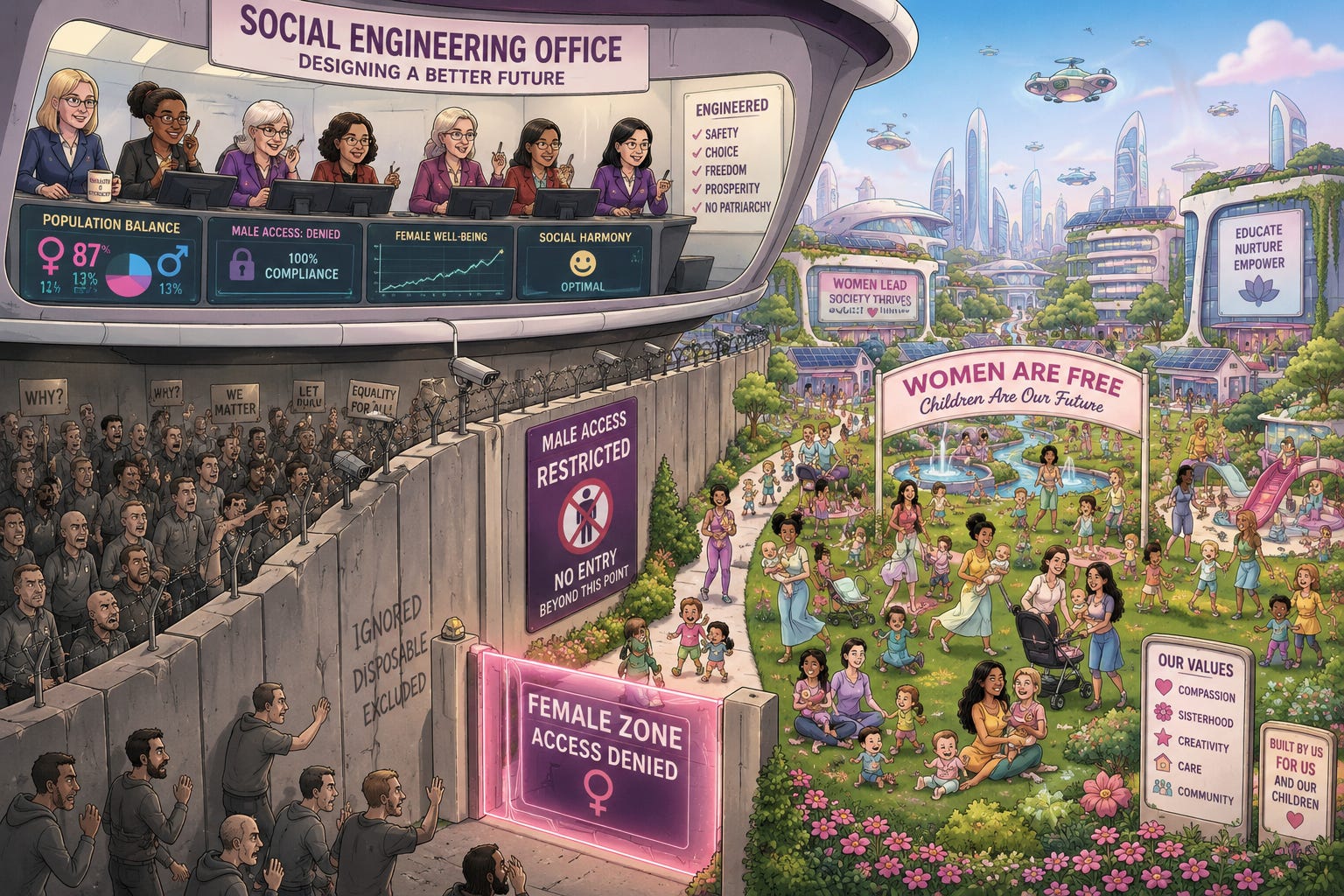
LEADING ARTICLE
Wall Street Journal Free Expression
Subsidizing single motherhood is a terrible response to the fertility crisis.
WEEKLY VOICE
THE NUZZO LETTER IN THE NEWS
The final version about my paper, “Sex Differences in Sit-and-Reach Flexibility in Children and Adolescents: A Meta-Analysis,” is now available online as free full-text access until July 7.
Those who wish to support our ongoing research on sex differences in fitness can do so via the dedicated Go Fund Me page. We still have one paper on the sex difference in the strength-to-body mass ratio that we are trying to get through peer review.
ARTICLES AND ESSAYS
Sex/Gender
Townhall
UN Media Campaigns Normalize Bias Against Men
International Coalition for Men and Boys
Men’s mental health awareness: are we saying too much or too little?
Centre for Male Psychology
The Myth of Male Expression: What Mainstream Psychology Gets Wrong About Men
Centre for Male Psychology
Reports on the Death of Love Are Exaggerated
The Fiamengo File
A recent New Statesman poll does not prove that young women hate men.
The Emerging Female Wage Premium
Quillette
Young women are now outearning young men; this structural shift has consequences that extend well beyond wages.
Sexual Terror Unveiled: The Untold Atrocities of October 7 and Against Hostages in Captivity
(NB. This report contains a section on male victims on pages 193-194 titled, “Rape and other forms of sexual violence against boys and men”.)
Circumcision procedure ends in tragedy in Samarkand: two children die
Zamin
Urology Case Reports
Abstract: In many African communities, including Somalia, traditional male circumcision remains a deeply rooted cultural practice. However, when performed by untrained individuals in resource-limited settings, it can result in severe complications. We report the case of a one-year-old Somali boy who suffered complete penile glans amputation after circumcision by a traditional practitioner using non-sterile instruments. The child developed urinary obstruction and swelling, with delayed access to medical care. At a tertiary hospital, reconstructive surgery was unavailable, and referral abroad was required. This case emphasizes the dangers of unsafe circumcision and the urgent need for safer, medically supervised practices.
Sexuality & Culture
Abstract: Height is a socially visible and psychologically salient characteristic, often linked to perceptions of attractiveness, dominance, and status. Despite its immutability in adulthood, height can become a source of dissatisfaction when individuals feel misaligned with internalized ideals. Our study examined height dissatisfaction using a novel visual tool, the Height Figural Rating Scale, in a sample of 328 Australian adults. We assessed actual height, height preference relative to a self-reference figure, and height dissatisfaction, and explored gender differences in these perceptions. Consistent with prior research, men overwhelmingly wished to be taller and those with this discrepancy reported significantly greater dissatisfaction than men content with their height. In contrast, women displayed a bi-directional pattern: shorter women wanted to be taller, while taller women expressed a desire to be shorter, with both groups reporting elevated dissatisfaction. These findings underscore that height concerns affect both genders, though in qualitatively different ways. Our results highlight the psychological significance of height in body image and challenge the assumption that height concerns are primarily male issues. Interventions targeting body dissatisfaction should consider height as a meaningful, often overlooked, dimension of self-evaluation.
Birth Expectations of Women Ages 20–49: United States, 2022–2023
National Center for Health Statistics
Key points: During 2022−2023, nearly 60% of women ages 20–29 who had not had any live births or who had one live birth expected to have a child in the future compared with about 30% of those with two or more live births. About two in five women ages 20–29 with no prior live births did not expect to have any children in the future. As age increased, the percentage of women with one or more previous live births who expected to have another child in 2–5 years declined.
Education
Results of censorship/self-censorship survey
University of Michigan - Faculty Senate
Penn State law school’s new ‘Strategic Plan’ makes ‘anti-racism’ core mission
The College Fix
‘Decolonial orientations’ psychologist sought at University of Rhode Island
The College Fix
Health Science
When Advocacy Masquerades as Neurology
Do No Harm
Dietary Supplement Use: United States, August 2021–August 2023
National Center for Health Statistics
Key points: During August 2021–August 2023, 35.7% of youth ages 0–19 years and 60.2% of adults age 20 and older used any dietary supplement in the past 30 days. Among youth, dietary supplement use was highest among those ages 2–11 years, while among adults, dietary supplement use increased with age. Overall, 11.3% of youth used two or more dietary supplements. Overall, 38.7% of adults used two or more dietary supplements, and use increased with age. Use of two or more dietary supplements increased among youth and adults from 2013–2014 through August 2021–August 2023.
PODCASTS
David Maywald on the Just Checking In Podcast
Episode description: Born and raised in Australia where he resides today, David has worked in finance for over two decades as an investment professional, holding roles of Research Analyst and is a top-quartile Portfolio Manager. He currently works as a governance specialist and holds a portfolio of board roles across the fields of health, education, families, active lifestyles, infrastructure, investment, and sustainability. He is also a father and the author of the book ‘The Relentless War on Masculinity: Does It Ever End?’. In this episode, we do a deep dive into the book, the themes he explores, who is waging this war on masculinity and why. We also talk about the process of publishing the book, which he had to do self-published, why his financial situation allowed him the freedom of expression to write without fear of cancellation, and the reception of the book. For David’s mental health journey, we discuss fatherhood and a couple of periods where he has been depressed in his life, due to his employment situation and being isolated from his social networks.
Episode description (starting around 21:20 min): There’ve been some big political and cultural wins for men lately, but still much work to be done. Author and Men’s Advocate DAVID MAYWALD joins us to discuss and our regular guest BETTINA ARNDT reveals some startling NEW statistics that should give us all cause for alarm: Young Women Don’t Like Men!
Suicidal Empathy Is Destroying The West | Gad Saad
Episode description: Professor Gad Saad argues that empathy directed at the wrong targets becomes a tool of civilisational self-destruction, and that every idea enabling this collapse was spawned on a university campus. Drawing on his own experience fleeing Lebanon as a Jewish child, Saad examines Britain’s grooming gang scandal, the pathologisation of masculinity, and the incoherence of Queers for Palestine, noting Gaza practises what he calls a gravity-based conversion therapy.
HISTORICAL ARCHIVES
Health Check: The boy who was raised a girl
BBC News (2010)
(Nuzzo note: I learned of this story this week while reading an article published at Brownstone Institute on the history of the field of psychiatry and the transgender movement. In the article, the author mentioned the story that is detailed in this BBC News article from 2010. The boy’s botched circumcision appears to have been the parents’ main driver in attempting to change the boy’s gender identity. The boy died by suicide later in life. Thus, the botched circumcision was a root cause of the boy’s eventual suicide.)
RUBBISH BIN

Australia Department of Defence
Politics and the Life Sciences
Abstract: The cross-national correlation between gender equality and lower fertility is exceptionally strong (r ≈ 0.81). After the 1960s, a unique mating regime spread across parts of the world—with female emancipation, individual mate choice, and effective birth control—followed by a continuing rise in singlehood and declining fertility. Almost all women still want to reproduce, but many struggle to find a good-enough partner. This article argues from an evolutionary perspective that many men’s utility to “free women” has been so diminished that solving the fertility crisis by increasing pair-bonding rates seems unfeasible. A viable means for aiding the survival of low-fertility nations could be to provide women with the economic and social resources necessary for them to conclude that having children alone makes for a better life than remaining childless. Such policies would likely exacerbate male marginalization, but new technologies are on the horizon that could offer men reproductive equality.
The Intersectionality of Misogyny: On Being Female, Fat, and Trans
Psychoanalytic Perspectives
Abstract: In a patriarchal world where misogyny is rampant and seemingly on the rise, just being female is enough to be relegated to otherness status. But what happens when additional stigmas, such as gender nonconformity or fatness, are layered onto an already marginalized female identity? The outcome is a form of intersectional experience where various types of discrimination interact and create an even greater level of prejudice. Furthermore, when analysts and patients share experiences of intersectional shame that confer non-privilege—like being female and fat—the shame residing in both can lead to significant disruption between them. Reflecting on my own countertransferential experience of non-privilege made it hard for me to see how my patient, who identified as female, fat, and transgender, might be suffering even more as a result of her compounded identities. Given the countless ways that intersectional identities can intersect, we can all gain from sharing clinical narratives that help illuminate these complexities.
Development of the White Innocence Legitimizing Beliefs Scale
Journal of Counseling Psychology
Abstract: This article reports the development and psychometric properties of the White Innocence Legitimizing Beliefs Scale, a measure designed to assess the degree to which an individual White person perceives White privilege applies to them, regardless of the extent to which they acknowledge the presence of White privilege in society. Across two studies, using samples of U.S. adults and college students, results provided evidence for this new measure’s reliability and validity. Exploratory and confirmatory factor analyses supported a hierarchical model with a superordinate factor (White innocence legitimization) and three factors that correspond to three subscales: Hard Work (rather than White privilege, as a contributor to one’s successes), Personal Hardship (which proves that White privilege has not been beneficial to oneself), and Distancing from Whiteness (racial privilege is less applicable to oneself). Evidence of reliability was demonstrated by high α coefficients and test-retest reliability. Convergent, discriminant, criterion-related, and incremental evidence of validity was also demonstrated. Considering these results, the conceptual, methodological, and practical contributions of the White Innocence Legitimizing Beliefs Scale to counseling psychology are discussed.
(My brief comment on this article is available on X here.)
Stop & Rest: Black Women, Refusal, and Rest as Praxis in Social Work
Affilia: Feminist Inquiry in Social Work
Abstract: This article explores the necessity of intentional rest for Black women and Black women social workers in the United States. It examines rest as a Black feminist and Womanist praxis of refusal, resistance, and restoration, highlighting how stopping overwork, divesting from performative equity systems, and prioritizing self-preservation protect our mental, physical, and spiritual well-being. The discussion situates rest within the historical and contemporary context of gendered anti-Black racism, the structural exploitation embedded in the professionalization of social work, and ongoing assaults on civil rights, bodily autonomy, and economic security. The article emphasizes the embodied, creative, communal, and spiritual dimensions of rest, framing it as essential for Black women’s survival, health, and collective liberation.
(My brief comment on this article is available on X here.)
Unworlding mentoring in Australian universities: creating feminist mentorship in the academy
Gender, Place & Culture
Abstract: Mentoring in the academy is a laudable exercise, but it continues to be shaped by powerful institutional infrastructures of inherited, white, patriarchal privilege. Drawing on interviews that explore mentoring experiences with academic women from three South Australian universities, this article documents the discursive and embodied spaces of mentoring programs and relationships that entrap, do violence to, and enable flourishing to occur. Building on feminist and queer scholarship that problematises mentoring programs within academia, we position space and its gendered relations as central to mentoring experiences; detailing the material, discursive, metaphorical and emotional entanglements that frame both dominant mentoring practices and possibilities for alternative feminist forms of mentoring. As a form of creative disruption Jack Halberstam’s architectural concept of ‘unworlding’ underpins our analysis, examining spaces where resilience and resistance thrive, where gendered bodies reclaim space and visibility, and alternative ways of doing and being can flourish. Within these broadened spaces, we reimagine feminist mentoring as a means of creation, disruption and protest.
A Roadmap to Neurologic Health Equity: An AAN Position Statement
Neurology
Abstract: Neurologic disorders affect more than 200 million people in the United States, yet inequities in neurologic health persist particularly among marginalized populations. These disparities are rooted not in biological differences but in inequitable social, economic, and structural conditions and result in disproportionate disease burden, delayed diagnoses, restricted access to specialty care, and subpar brain health outcomes for populations experiencing health disparities (HDPs). Existing national health equity frameworks from the NIH demonstrate that neurologic inequities are shaped by intersecting social determinants of health (SDOH) and structural barriers that limit fair and just opportunities to achieve optimal brain health. In response, the American Academy of Neurology (AAN) proposes a comprehensive Roadmap to Neurologic Health Equity, grounded in the principle that every individual should have the opportunity to attain their highest level of brain health. The AAN roadmap provides a coordinated strategy to address health inequity across 4 domains: (1) Clinical Practice and Quality, (2) Scientific Knowledge and Research, (3) Education and Awareness, and (4) Advocacy. For clinical practice, the roadmap emphasizes integrating SDOH into clinical care delivery, expanding language services and culturally responsive models, and advancing workforce diversity to better reflect and serve diverse communities. Research priorities include strengthening rigor in disparities research, increasing participation of HDPs in clinical studies, and expanding training pathways for investigators committed to health equity. Educational initiatives focus on embedding health equity content throughout neurology curricula, enhancing clinician awareness of health disparities through AAN programming, and strengthening communication skills necessary for effective community engagement. The policy and advocacy framework targets systemic reforms such as expanding insurance coverage, improving reimbursement for complex neurologic care, investing in telehealth infrastructure, and addressing the national neurology workforce shortage through increased Graduate Medical Education funding and secure immigration pathways for international neurologists willing to serve in underserved areas. Together, these strategies provide a unified, actionable approach to advancing brain health equity across the lifespan. The AAN calls upon clinicians, researchers, educators, policymakers, and community advocates to join in implementing this roadmap and ensuring that the pursuit of optimal brain health is attainable and equitable for all.
SUPPORT THE NUZZO LETTER
If you appreciated this content, please consider supporting The Nuzzo Letter with a one-time or recurring donation. Your support is greatly appreciated. It helps me to continue to work on independent research projects and fight for my evidence-based discourse. To donate, click the DonorBox logo. In two simple steps, you can donate using ApplePay, PayPal, or another service. Thank you!

If you prefer to donate to a specific project, please see the Go Fund Me page for my current research on sex differences in muscle strength in children.

Thank you James for gathering all that important news and information for us all to read 👌
It's ok James. We are going to introduce Islam and Sharia Law to the west. Women will be reduced to the status of a car or a dog. That sort of thing.