
Weekly Roundup
Nov 24 – 30, 2025
LEADING ARTICLE
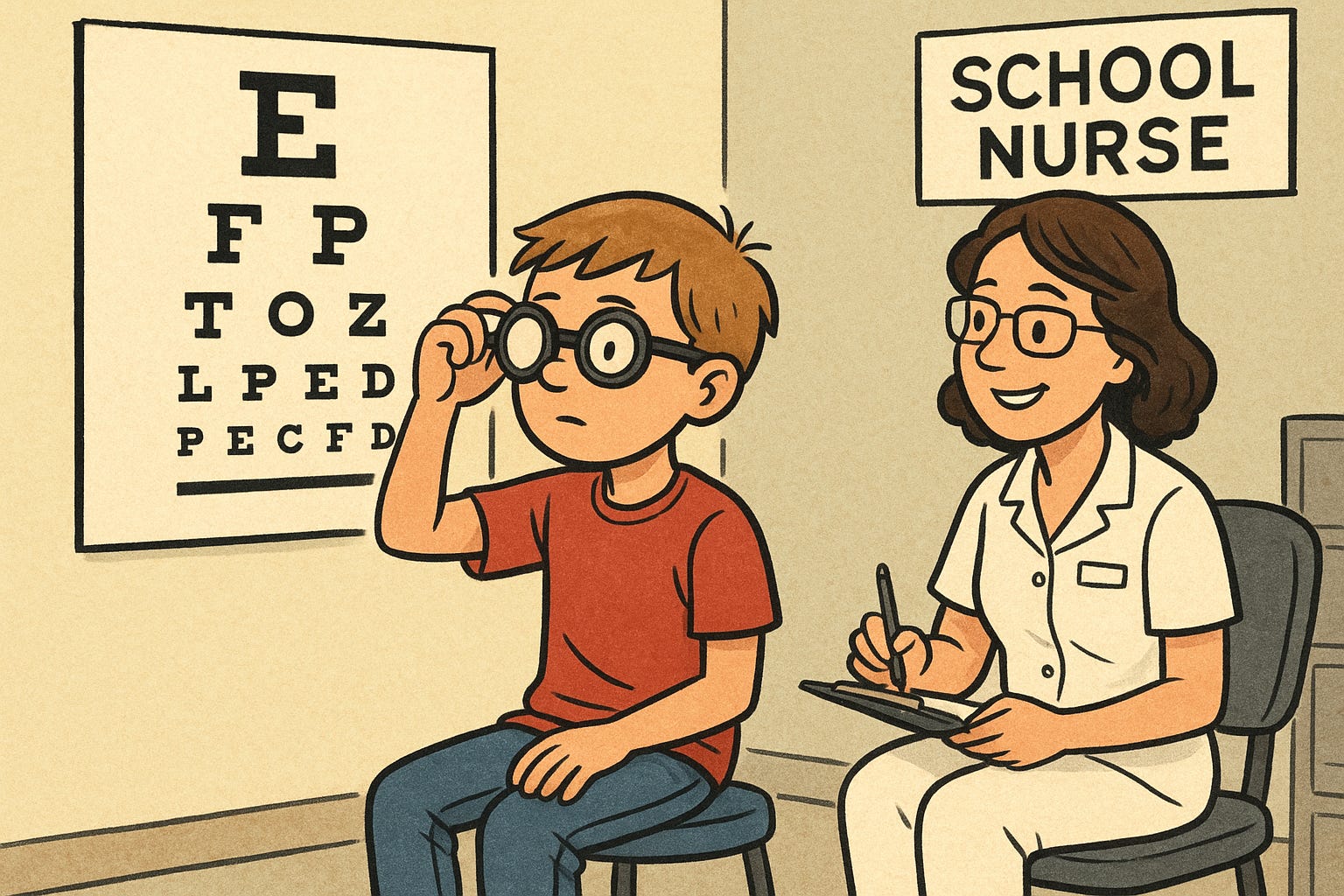
Difficulties in Functioning Among Children in the United States: 2021-2023
National Health Statistics Reports
Abstract: Objectives: This report presents national estimates of difficulties in functioning for children ages 2-17. Methods: 2021-2023 National Health Interview Survey (NHIS) data were used to assess difficulties in functioning among children. NHIS has included the Child Functioning Module, developed jointly by UNICEF and the Washington Group on Disability Statistics, since 2019. The module’s questions ask about difficulties in the following functional domains: seeing, hearing, walking, communication, behavior, and learning (for all children ages 2-17); fine motor and playing (for children ages 2-4); and self-care, remembering, concentrating, coping with change, relationships, and affect (anxiety and depression) (for children ages 5-17). Prevalence estimates were calculated for different levels of difficulty (a lot of difficulty, some difficulty, or no difficulty) and are presented for overall functioning, by individual functional domain, and by number of functional domains where difficulties were reported. Differences in functioning by age, sex, race and Hispanic origin, urbanization level, and family income are also presented. Results: In 2021-2023, about one-quarter (24.9%) of children ages 2-4 experienced difficulties in functioning (4.1% experienced a lot of difficulty in one or more domains and 20.8% experienced some difficulty). Among children ages 5-17, just over one-half (50.8%) experienced functioning difficulties (13.0% experienced a lot of difficulty and 37.8% experienced some difficulty). The prevalence of functioning difficulties varied by sex, with boys being more likely than girls to experience a lot of difficulty in at least one domain, but differences across other characteristics varied. Functioning difficulties were most prevalent in the domains of communication, learning, behavior, and playing among children ages 2-4. For those ages 5-17, the most prevalent domains were anxiety, accepting change, behavior, depression, and making friends. Among children who experienced functioning difficulties, most had difficulty in only one functional domain.
THE NUZZO LETTER IN THE NEWS
Gender Bigotry at the Highest Levels of the United Nations
Coalition to End Domestic Violence
ARTICLES AND ESSAYS
Sex/Gender
Eager to Affirm, Yet Unwilling to Defend Their Claims
Reality’s Last Stand
The peer-review process for the HHS report on pediatric gender medicine exposed the ideological capture of major medical organizations.
Dispatches from the Long War on Fathers
The Fiamengo File
Celebrating Masculinity
Taxpayer funding is going to the wrong programs and services.
Education
Niall Ferguson: Without Books We Will Be Barbarians
Free Press
‘Knowledge-Rich’ and Blah, Blah, Blah
Quadrant
Homeschool registrations are rising and policy needs to catch up
ABC
The Society for Academic Emergency Medicine Hosts DEI Activism Discussion
Do No Harm
Harvard report warns of ‘damaging’ grade inflation, 60% of grades are A’s
The College Fix
The decline in reading for pleasure over 20 years of the American Time Use Survey
iScience
Abstract: Reading has a wide range of benefits for literacy, employment, and health as well as promoting cultural understanding. However, previous monitoring of reading in the US has been inconsistent, with some studies demonstrating large declines over time, and others suggesting engagement has not changed. We measure reading for pleasure and reading with children from 2003 to 2023, using a nationally representative sample from the American Time Use Survey (n = 236,270). We found marked declines in the proportion of individuals reading for pleasure daily in the US, with decreases of 3% per year (prevalence ratio = 0.97, 95% confidence interval = 0.97, 0.98, p < 0.001). There were disparities across population groups, with widening gaps for those of Black (vs. White) race, with lower education levels and less annual income. Our findings demonstrate the need for more targeted strategies to increase opportunities for reading for pleasure. Monitoring daily reading, and factors influencing reading, will be vital to understand the impacts of future policies.
(*For sex-segregated data from the American Time Use Survey, including time spent reading, see the following post at The Nuzzo Letter.)
Epidemiology
Nearly One in 10 U.S. Adults Report Having Had Cancer
Gallup
Yet Another Review Finds Racial Concordance Fails to Improve Health Outcomes
Do No Harm
Exercise Science
Scientific Reports
Abstract: Adherence rates to current twice-weekly strength training guidelines are poor among older adults. Eccentric-only training elicits substantial improvements in muscle function/size so the aim of this study was to compare the effects of once- versus twice-weekly eccentric training programmes on muscle function/size in older adults. Thirty-six participants (69.4 ± 6.0 yr) were randomised into non-active control, once-, or twice-weekly training groups. Lower-limb muscle power, strength, and size were assessed at baseline, mid-, and post-eccentric training. Training was performed for 12 min per session at 50% of maximum eccentric strength. Significant increases in power (13%), isometric (17-36%) and eccentric (40-50%) strength, and VL muscle thickness (9-18%) occurred in both training groups following 12 weeks. Minimal muscle soreness was induced throughout the 12 weeks and perceived exertion was consistently lower in the twice-weekly training group. One weekly submaximal eccentric resistance training session over 12 weeks elicits similar improvements in neuromuscular function compared to the currently recommended twice-weekly training dose. Given the substantial improvements in neuromuscular function and previously reported low adherence to current twice-weekly training guidelines, eccentric training may be pivotal to developing a minimal-dose strategy to counteract neuromuscular decline.
RUBBISH BIN

Horror stories of a ‘feminised workplace’ mask the real crisis in male identity
The Guardian
Italy now recognizes the crime of femicide and punishes it with life in prison
Associated Press
(My brief comment on this article is available on X here.)
Which skin color emoji should you use? The answer can be more complex than you think
NPR (2022)
Inventor Masculinity: Innovation, Competition, and Male Privilege in Academic Science
Men and Masculinities
Abstract: Men faculty scientists engage in academic entrepreneurship at higher rates than women, yet few studies examine how masculinity shapes this disparity. This article conceptualizes inventor masculinity to explain how cultural practices and institutional processes reinforce academic entrepreneurship as masculine. Drawing on five years of fieldwork and 60 interviews in an academic research center and traineeship program, I show how academic faculty scientists perform inventor masculinity through cultural practices like competition, technical dominance, and sexist humor. While inventor faculty often separate social and technical domains, some strategically bridge the social and technical in service of market competition. These practices are reproduced through mentorship and training. Institutional processes like recruitment reward masculine practices while devaluing women and feminine practices. Through my investigation, this article reveals how cultural practices and institutional processes reinforce academic entrepreneurship as masculine, shaping who is included, what kinds of work are recognized, and how scientific success is valued.
(My brief comment on this article is available on X here.)
SUPPORT THE NUZZO LETTER
If you appreciated this content, please consider supporting The Nuzzo Letter with a one-time or recurring donation. Your support is greatly appreciated. It helps me to continue to work on independent research projects and fight for my evidence-based discourse. To donate, click the DonorBox logo. In two simple steps, you can donate using ApplePay, PayPal, or another service. Thank you!

If you prefer to donate to a specific project, please see the Go Fund Me page for my current research on sex differences in muscle strength in children.

Great stuff Jim, but the Inventor Masculinity got me laughing! Then I saw he spent 5 years at this and all I could do was cry.....tears of laughter. Do they know how silly they look?
Who would have thought that the UN was Evil 🙄 and right before our eyes!!!👀
I’m constantly astounded at how so many still think that WWII was the only Evil time 🤷♂️and how those times are used as some sort of distraction from any current events!!!