
Homelessness in the United States, 2015-2024
Graph of the Week
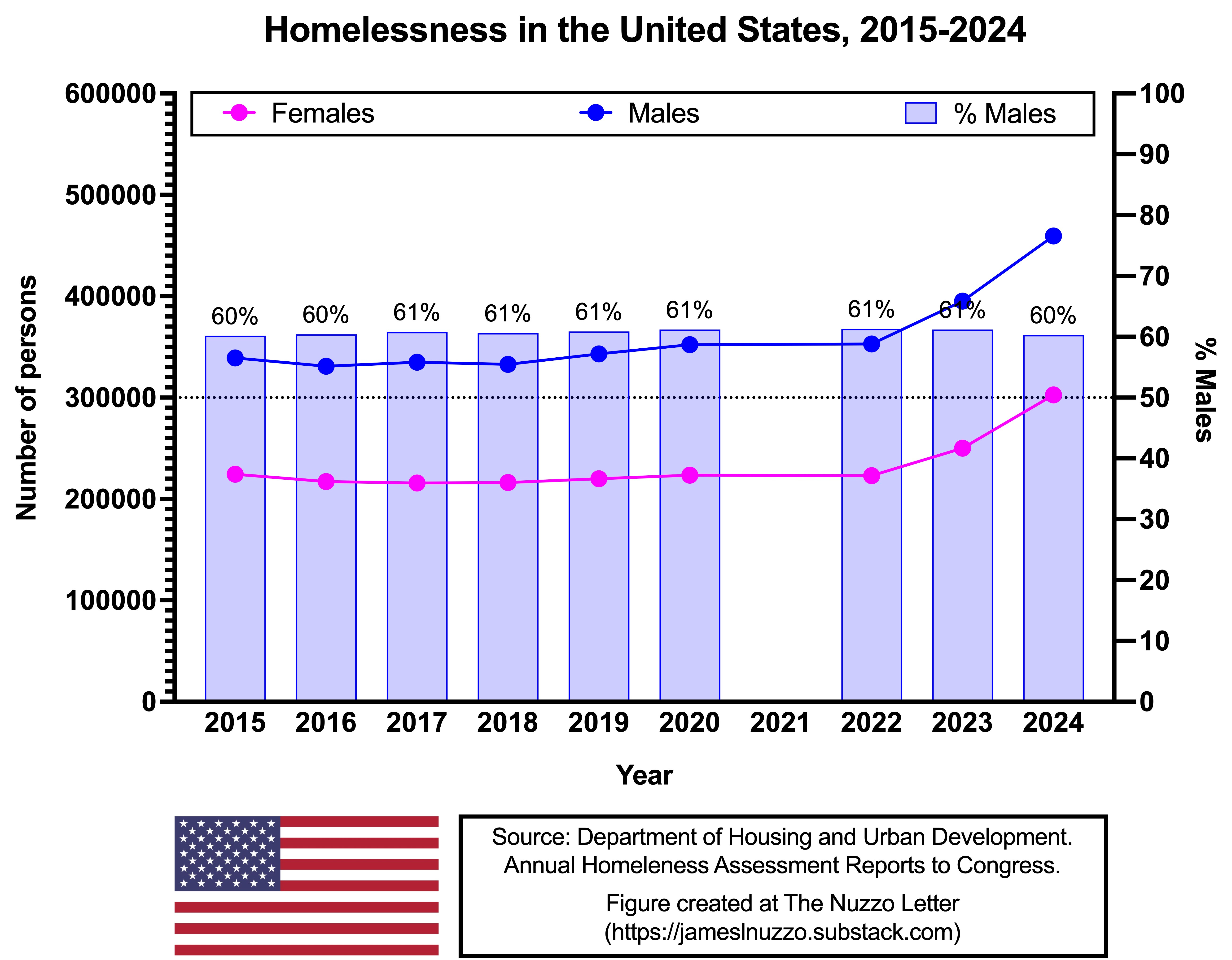
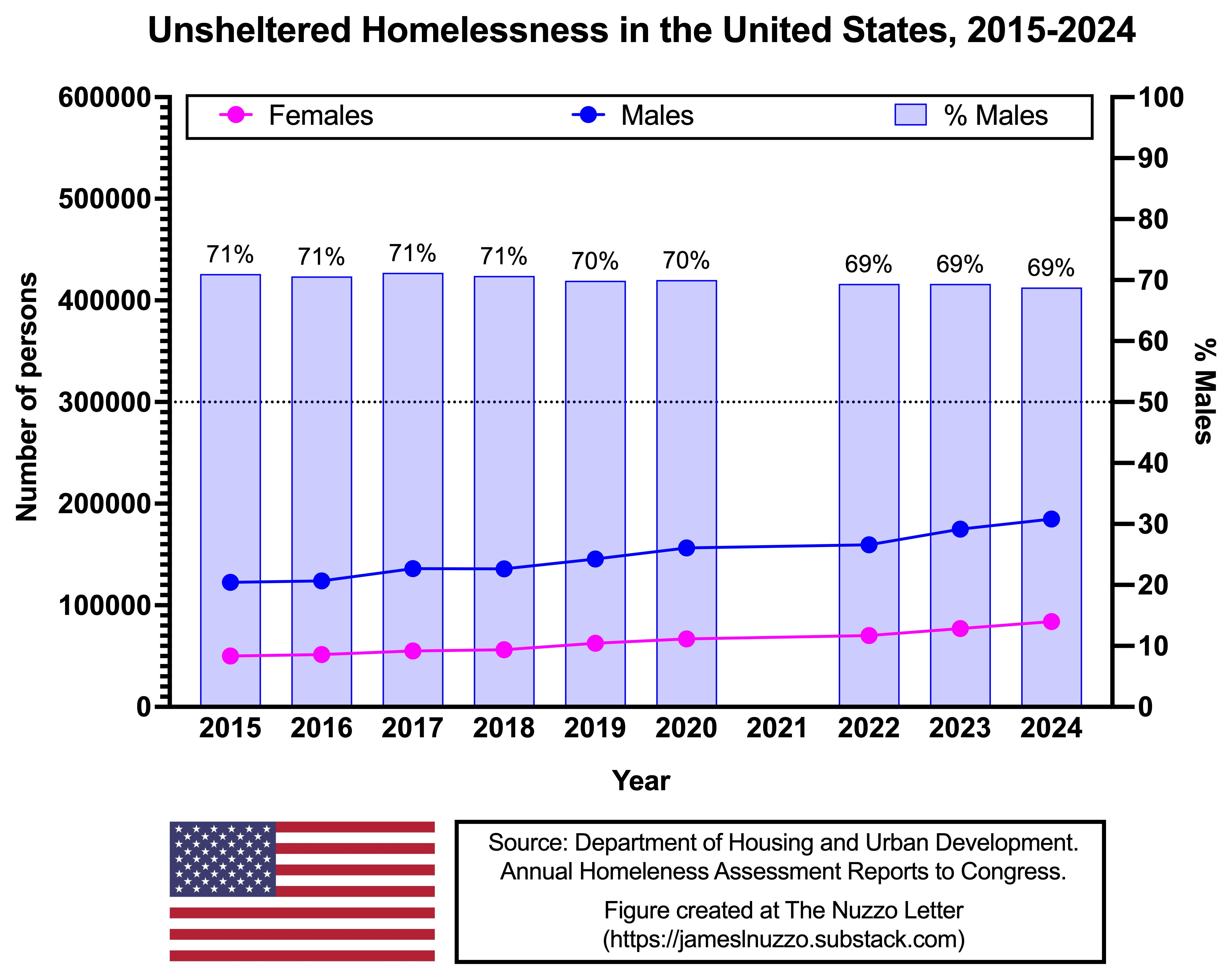
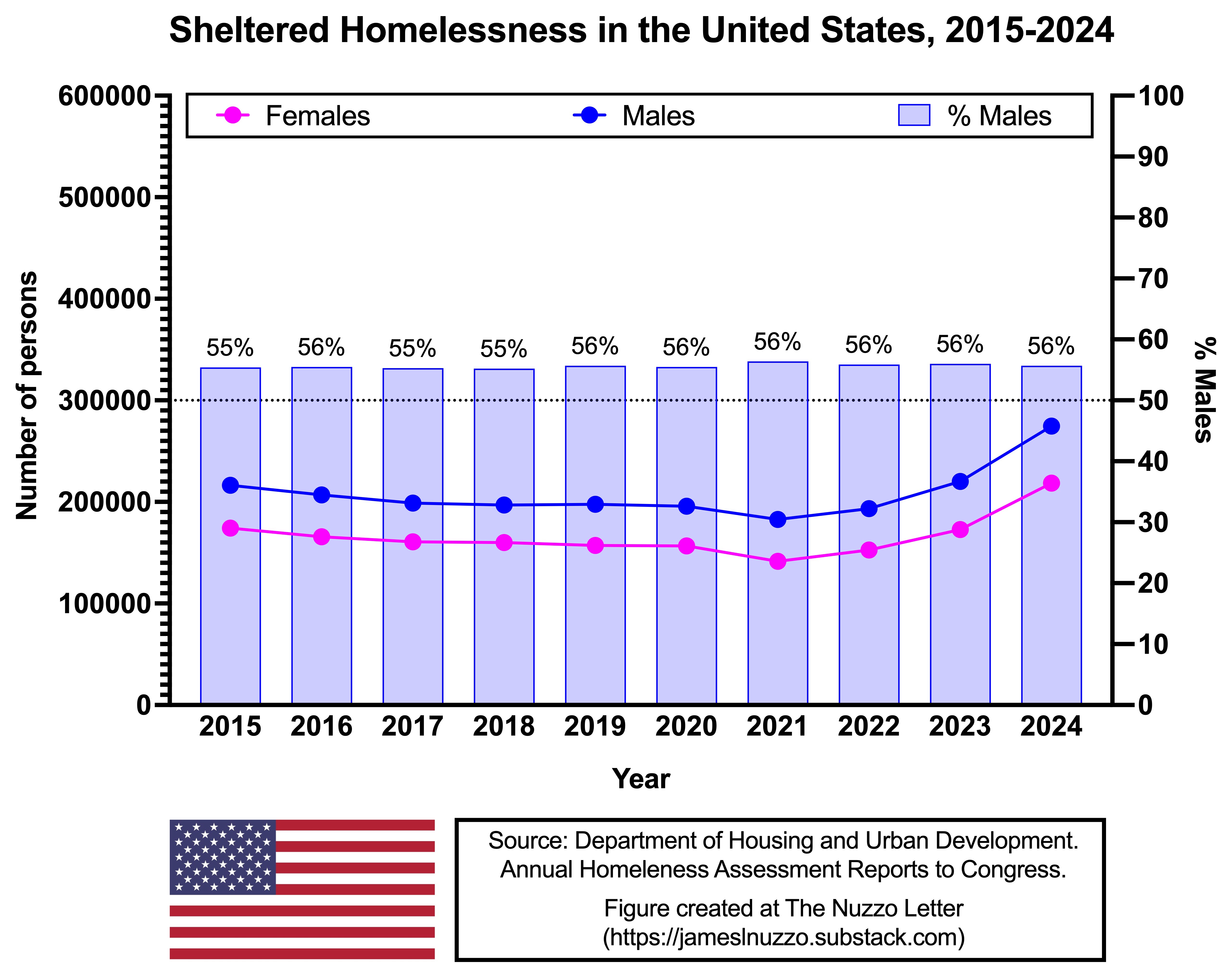
This week’s graphs show the estimated number of males and females in the United States (U.S.) who were homeless between 2014 and 2024. The first graph shows the data for homelessness of any type (i.e., unsheltered + sheltered homelessness). The second graph shows the data for unsheltered homelessness. The third graph shows the data for sheltered homelessness. Due to the COVID-19 pandemic, data on unsheltered homelessness and thus total homelessness were unavailable for 2021. See the relevant reports for further details on how homelessness is defined and how data on homelessness are collected.
Key Points
Between 2015 and 2022, the number males and females who were homeless remained roughly constant. Approximately 340,000 males and 220,00 females experienced homelessness each year over that time.
The number of male and female homeless then increased in 2023 and increased further in 2024. In 2024, 459,568 males and 302,660 females were homeless in the U.S. Thus, 60.3% of the U.S. homeless population is male.
The sex difference in homelessness is greater for unsheltered than sheltered homelessness. Since 2015, males have consistently comprised 69-71% of the unsheltered homeless in the U.S., while comprising 55-56% of the sheltered homeless in the U.S.
Sources
The data in the graphs were extracted from tables published by the Department of Housing and Urban Development in their Annual Homelessness Assessment Reports to Congress. These reports are available here.
Bonus Commentary
The data in graphs reveal that more males than females are homeless in the U.S. Over the past 10 years, men have consistently comprised 60% of the U.S. homeless population. This sex difference is amplified among the unsheltered homeless (69-71% males) than the sheltered homeless (55-56% males). Besides sex, other homelessness correlates or contributors include, but are not limited to:
Housing affordability and availability
Unemployment or reduced income
Conflict with others in previous residence
Experiencing violence in previous residence
Impact of fire or natural disaster on previous residence
Lack of social network
Physical health issues (e.g., physical disability)
Mental health issues and substance use (e.g., drugs, alcohol)
Past imprisonment
Remarkably, though male sex has been associated with homelessness and the precursors of homelessness for many years, big public health has historically not recognized men’s health as a unique area of inquiry. No federal offices for men’s well-being have ever been established in the U.S., while several such offices for women’s well-being have been established.
Related Content at The Nuzzo Letter


SUPPORT THE NUZZO LETTER
If you appreciated this content, please consider supporting The Nuzzo Letter with a one-time or recurring donation. Your support is greatly appreciated. It helps me to continue to work on independent research projects and fight for my evidence-based discourse. To donate, click the DonorBox logo. In two simple steps, you can donate using ApplePay, PayPal, or another service. Thank you!

and another one :(.